Khao Sok National Park: The Complete Adventure Guide Nobody Else Has Written
This site contains affiliate links. We may earn a commission at no extra cost to you.
Most guides to Khao Sok tell you it exists. They tell you there is a lake. They recommend you go. Then they list the same three activities in the same order and send you off to figure out the rest yourself. This one works differently. Khao Sok is one of the most extraordinary natural environments in Southeast Asia, an ancient rainforest older than the Amazon sitting alongside a limestone-cliff reservoir so visually arresting that it has been compared to Ha Long Bay and Guilin. It deserves a guide that matches it.
The 739 km² park sits in Surat Thani Province in southern Thailand, wedged conveniently between Phuket, Krabi, and Koh Samui on the island ferry route. Despite this, the vast majority of travellers move past it entirely. Those who stop almost universally describe it as the highlight of their Thailand trip. That gap between reputation and visitor numbers is closing fast: if you are planning a southern Thailand itinerary in 2026 or 2027, building Khao Sok into it is one of the best decisions you can make.
All costs are in Thai Baht (THB) and US Dollars (USD), calculated at 1 USD = 35 THB.
What Khao Sok Actually Is: The Context Most Guides Skip
Khao Sok is one of the oldest rainforests on the planet, with an estimated age of 160 million years. For context, the Amazon rainforest is roughly 55 million years old. During the ice ages, while other forests retreated, Khao Sok maintained its biodiversity largely intact because the surrounding mountains trapped moisture and created a microclimate that resisted glacial desiccation. The result is a forest of extraordinary biological depth: 48 mammal species, 311 bird species, over 200 tree species per hectare in the densest sections, and plant life found nowhere else on earth.
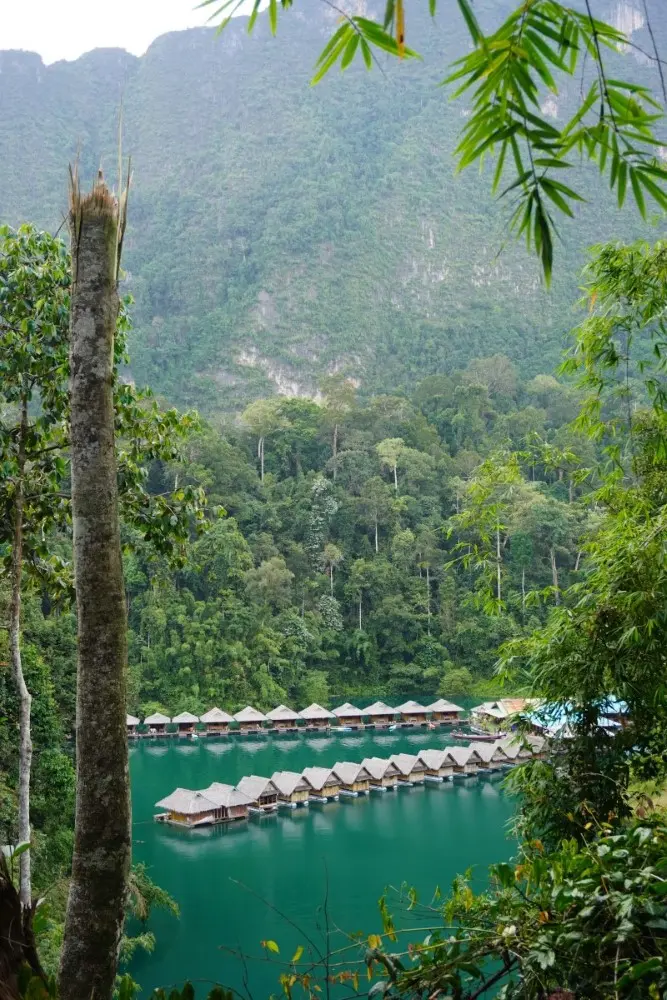
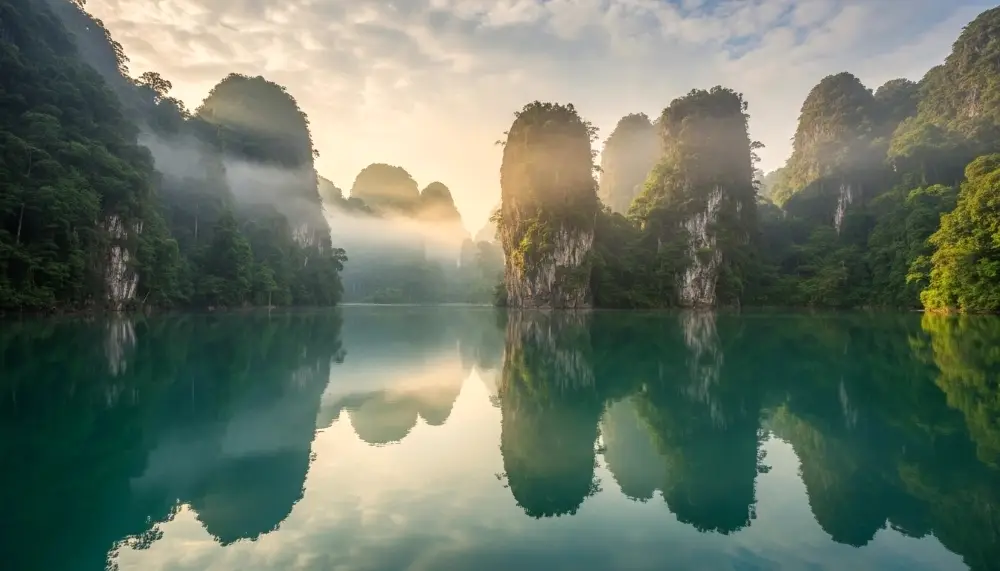
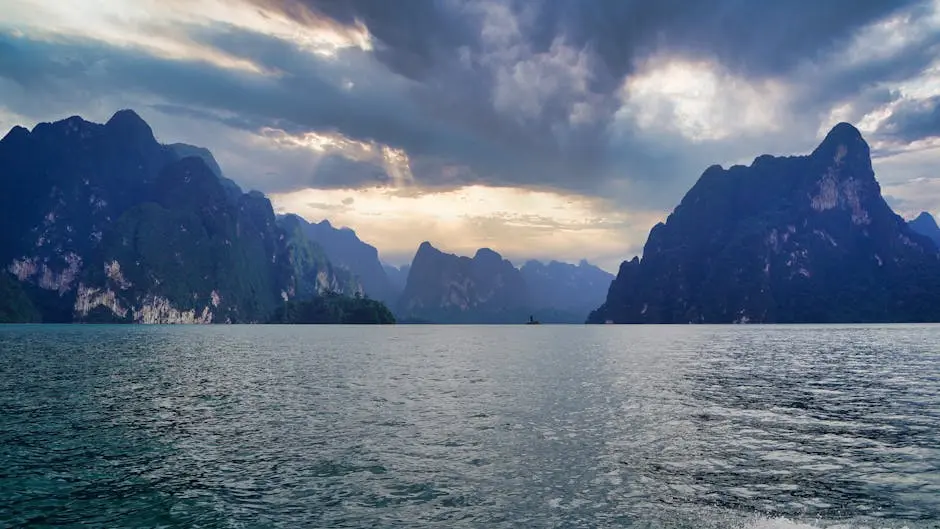
Cheow Lan Lake, the park’s central water feature, is entirely man-made. It was created in 1987 when the Ratchaprapha Dam was built across the Pasaeng River, flooding a valley of submerged forest and submerged villages. The limestone karst towers that now rise vertically from its surface were hilltops before the dam. The effect is visually staggering: sheer cliff faces 900 metres high reflected in completely still, emerald-green water, ringed by jungle at the waterline. This is not a landscape that looks like anywhere else in Thailand. It barely looks like anywhere on earth.
The park has two distinct sections that require different planning approaches. Khao Sok village and the rainforest area sit along the main road and serve as the base for jungle trekking, river activities, caving, and night safaris. Cheow Lan Lake sits 65 km further into the park and is accessed by longtail boat from the Ratchaprapha Dam pier. Visiting both in a single trip requires at least three days: one night in the village, one to two nights on the lake. Most people who try to rush it in a day trip from Phuket spend most of their time in a van.

Compare hotel prices across Khao Sok’s
best areas and book with confidence.
Filter by budget, location, or score
to find the right stay for your trip.
Getting There: The Routes That Actually Work
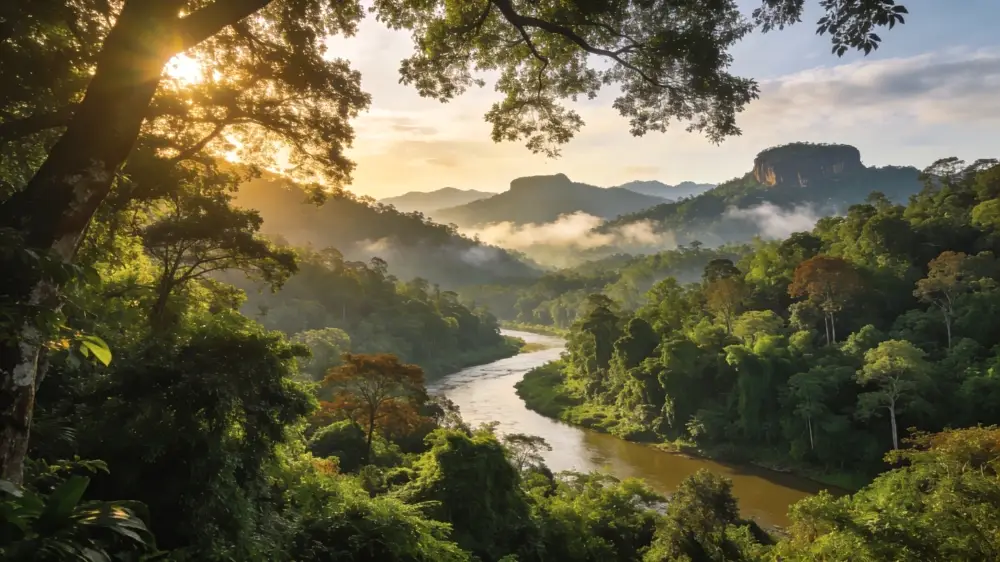
Khao Sok’s location is its greatest logistical advantage: it sits almost equidistant between Phuket, Krabi, Koh Samui, and Koh Lak. This makes it the natural midpoint for any southern Thailand itinerary that moves between the Andaman coast and the Gulf islands.
From Phuket or Khao Lak, the drive to Khao Sok village takes approximately two to three hours. A shared minivan from Phuket costs 400 to 600 THB ($11.43 to $17.14 USD) per person and is the most common budget approach. A private transfer for up to four people runs approximately 2,500 THB ($71.43 USD) total and is the right choice for families, couples, or anyone arriving with more than one bag.
Book transport through 12GO for confirmed seats and e-tickets, particularly during the peak November to March window when shared minivans book up. For group arrivals flying into Phuket International, Welcome Pickups offers fixed-price named driver transfers that go directly to Khao Sok without the usual shared van routing via Phuket town.
From Surat Thani, the journey takes approximately two hours by bus or shared van. Surat Thani Airport (URT) is the underused secret for this route: flights from Bangkok frequently cost less than those into Phuket, and the proximity to Khao Sok makes it an ideal entry point for anyone whose itinerary begins with the park before heading west to the Andaman coast. Book the Surat Thani to Khao Sok connection through 12GO. Activate an Airalo, Yesim, or Saily eSIM before departure: Khao Sok village has limited signal, and the Grab app for local rides requires SMS verification that cannot be completed without prior data registration.

Lock in top-rated Khao Sok tours with
GetYourGuide’s free cancellation
up to 24 hours before. Reserve now
and pay later if dates aren’t set.
Cheow Lan Lake: The One Night That Changes Everything
Spending a night on a floating raft house on Cheow Lan Lake is, without qualification, one of the most extraordinary accommodation experiences available anywhere in Southeast Asia. The bungalows float directly on the water, surrounded by vertical limestone faces on every side and jungle pressing down to the waterline. There is no internet. Electricity runs from a generator between approximately 6:00 PM and 11:00 PM. After that, the lake is completely dark and completely quiet except for the jungle, which is emphatically not quiet.
What you hear at night on Cheow Lan Lake is one of the things that genuinely cannot be described in writing and has to be experienced. Gibbons start calling at dawn with a sound that carries across the water like something from a nature documentary turned to full volume. Hornbills, with their extraordinary wingbeats, pass overhead. Frogs and insects create a continuous layered sound that rises and falls through the night. Wild elephants occasionally move along the shoreline. If you sleep on the lake and miss all of this because you kept your earphones in, you have genuinely wasted your money.
The floating bungalows range from basic bamboo raft houses with shared bathrooms and fan ventilation, all the way to boutique floating resorts with private bathrooms and a significantly more comfortable setup. All packages include all meals (Southern Thai cuisine, typically excellent), a guided afternoon lake safari by longtail, and a guided morning safari at dawn when wildlife activity is at its peak. National park fees of 300 THB ($8.57 USD) per person are paid separately at the pier in cash and are not included in most tour prices.
A two-day, one-night package per person runs approximately 2,500 to 5,250 THB ($71.43 to $150 USD) for group join-in tours, rising to 8,750 THB ($250 USD) and above for boutique private options. The Panvaree Resort represents the luxury end of the lake accommodation spectrum, with teak villa-style floating rooms and a level of comfort that transforms the experience without diminishing the essential wildness of the setting. Book through Klook or Get Your Guide for verified operators with transparent pricing and cancellation policies. All access to the floating bungalows is by licensed longtail boat only: independent access to the lake’s interior is not permitted.

Airalo covers Khao Sok with a range of
data plans from days to a month.
No physical SIM swap, no roaming
bill shock when you get back home.
The Jungle Section: What to Do in Khao Sok Village
Jungle Trekking: The Trails Worth Taking
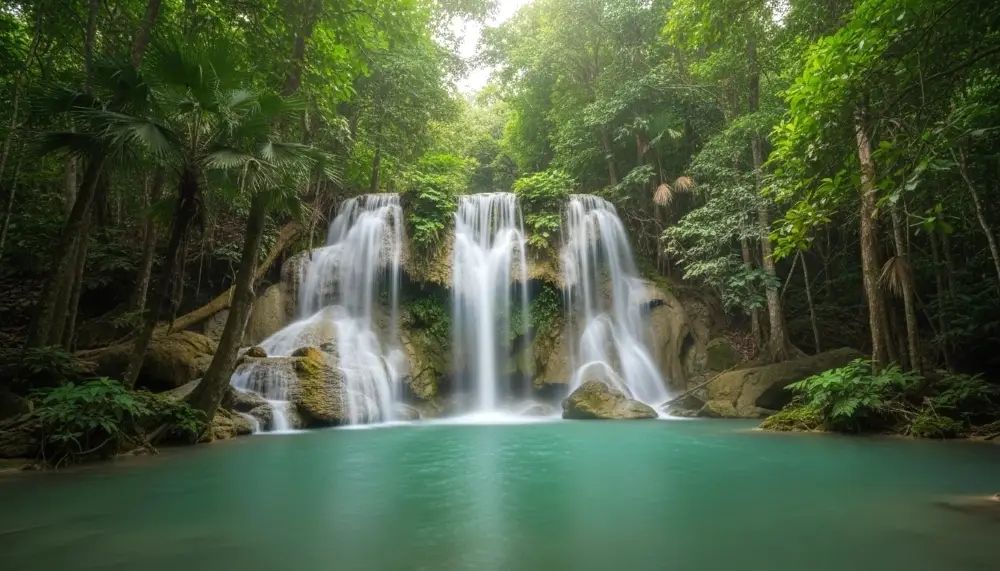
The national park entrance near Khao Sok village opens a network of trails ranging from short self-guided loops to full-day guided treks deep into primary forest. The park entrance fee is 300 THB ($8.57 USD) per person, valid for the day, payable in cash only. Several shorter trails within the immediate park entrance area can be walked independently. For anything deeper into the forest, where the serious wildlife encounters occur, a local guide is essential both ecologically and practically: the rainforest is dense, the trails are not always clearly marked, and the wildlife you came to see is exactly the kind that requires someone who knows where to look.
Half-day guided treks cost approximately 600 to 1,000 THB ($17.14 to $28.57 USD) per person. Full-day treks with cave exploration, waterfall visits, and river crossings run 1,400 to 2,100 THB ($40 to $60 USD). The Tham Nam Ta Lu water cave (Nam Talu Cave) is a particular highlight: a guided wading trek through a cave system carved by the Sok River, accessible during the dry season from November through May when water levels are manageable. During the rainy season this specific cave closes for safety reasons, but other trails open opportunities that the dry season cannot match, including river tubing on the swollen Sok River and a jungle that is visibly alive in ways that the drier months mute.
The Rafflesia: The World’s Largest Flower in a Two-Month Window
Khao Sok is one of the few places on earth where you can see the Rafflesia arnoldii: the world’s largest flower, with blooms reaching a metre in diameter and a scent described variously as rotting meat, old fish, and something genuinely indescribable. The Rafflesia only blooms for a few days at a time, and the season window is roughly January through March each year. It is entirely possible to visit Khao Sok specifically to see one and arrive to find nothing open. It is equally possible to visit with no particular intention and stumble across a bloom in full flower.
Spotting the Rafflesia requires a guided trek with a ranger who monitors the known populations and knows which buds are close to opening. This is one experience you genuinely cannot shortcut by going independently. The guides in Khao Sok village run Rafflesia-specific treks when blooms are active, costing approximately 800 to 1,400 THB ($22.86 to $40 USD) per person including the park fee. If seeing the Rafflesia is a specific ambition, build flexibility into your Khao Sok dates and check with local guides shortly before arrival to confirm current bloom status.
Night Safaris: What the Park Looks Like After Dark
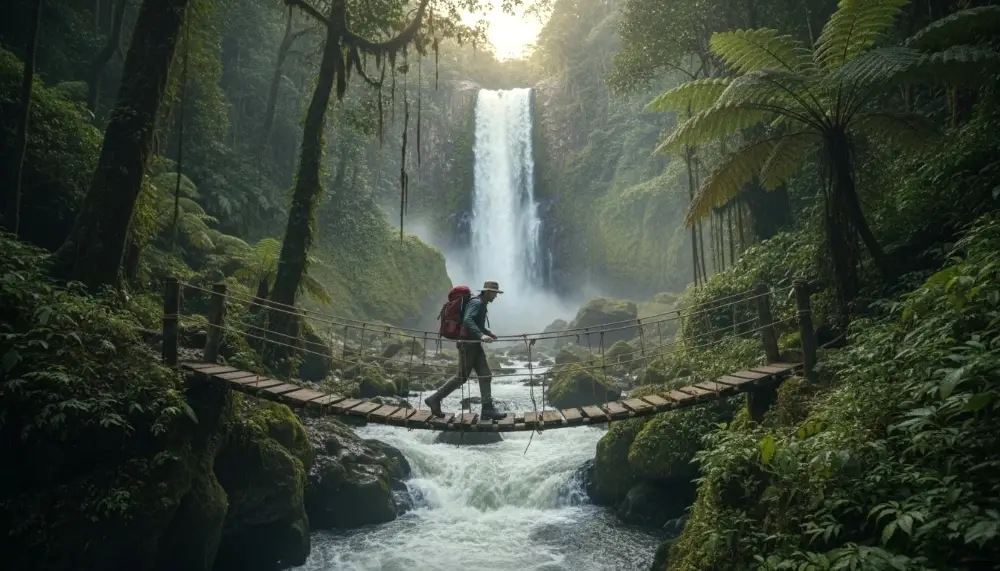
Khao Sok’s night safari is the activity that most daytime visitors never consider and most overnight guests describe as unexpectedly revelatory. The nocturnal layer of the rainforest is completely different from the daytime version: civets, slow lorises, various frog species, flying squirrels, invertebrates of spectacular variety, and occasional glimpses of larger mammals moving through the understorey become visible only after dark with a headlamp and a guide who knows the patterns.
Night safari tours from Khao Sok village typically run two to three hours from around 8:00 PM, costing approximately 700 to 1,050 THB ($20 to $30 USD) per person including a guide. Some tours combine the night safari with a full-day trek earlier in the same day as a single package, costing approximately 1,750 to 2,450 THB ($50 to $70 USD). Book through Get Your Guide for verified operators with appropriate safety equipment and licensed guides. This is one of the activities in Thailand where quality of guide makes the most direct difference to the experience: a knowledgeable, genuinely engaged naturalist guide transforms a walk in the dark into something memorable.

From temples to island tours, Klook
covers Khao Sok’s best experiences.
Hotel pickup is often included and
prices beat the pier walk-in rate.
Wildlife: What the Park Actually Holds
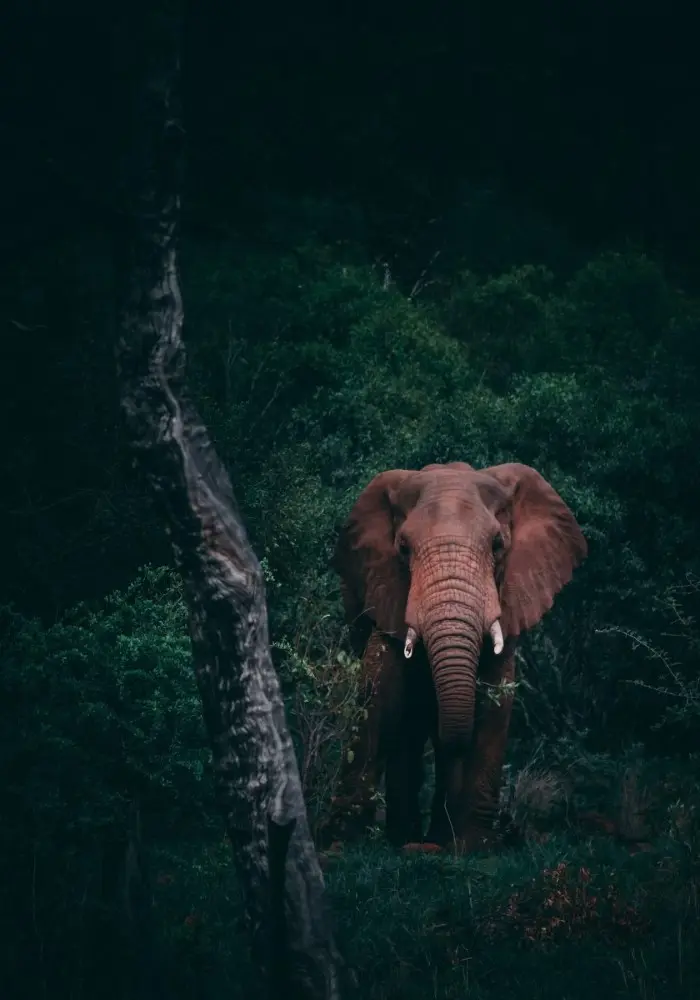
The wildlife at Khao Sok is not incidental. It is one of the few remaining contiguous habitats in southern Thailand large enough to support genuinely self-sustaining populations of large mammals. Wild Asian elephants move through the park and are most commonly seen along the shores of Cheow Lan Lake during the dry season, particularly February through May when they visit the waterline during morning and late afternoon boat safaris. Sightings are not guaranteed, but they are frequent enough that operators with specific knowledge of elephant movement patterns have near-consistent success during this window.
Nine of the world’s 57 hornbill species have been recorded in the park. The Great Hornbill, with its extraordinary casque and five-foot wingspan, is the most dramatic, and its wingbeats are audible from a considerable distance before the bird itself becomes visible. Gibbons are heard at dawn every morning without exception and seen regularly in the canopy. Dusky leaf monkeys, macaques, and langurs are common throughout. The park also holds populations of clouded leopards, Malayan tigers, Asiatic black bears, and gaur (wild cattle), though these are rarely encountered and require extended time in the deeper sections of the forest.
For birdwatchers, Khao Sok is one of the most productive single sites in Thailand. The Malayan Banded Pitta, the Blue-Eared Kingfisher, and a range of endemic and near-endemic species draw serious birders who spend several days working the early morning trails before the heat builds. If birding is a specific ambition, speak to local guides about the current activity at the park entrance: the regular trail along the Sok River in the first hour after dawn is among the most reliable birdwatching routes in southern Thailand.

Affordable Khao Sok data without the
tourist SIM hassle. Saily’s eSIM
works on most modern phones and
tops up remotely whenever needed.
Seasons, Costs, and What to Actually Budget

Unlike Thailand’s marine parks, Khao Sok is open year-round. This is one of its advantages as a travel planning asset: it works in months when the Similan Islands are closed and the Andaman coast is too rough for island hopping. The dry season, November through April, offers the best cave trekking conditions (Nam Talu Cave is accessible), the clearest lake water, and the highest elephant-sighting probability. The wet season, May through October, brings river tubing, a forest that is dramatically alive with moisture, lower accommodation prices, and significantly fewer visitors. Leeches during rainy season treks are a reality: tuck trousers into socks, apply salt or repellent to footwear, and accept this as part of the authentic experience.
ATMs are limited near the park. There is one in Khao Sok village, but the standard approach is to withdraw sufficient cash in Khao Lak or Phuket before arriving. The 220 THB ($6.29 USD) Thai ATM fee applies: use a Wise card and select “Continue Without Conversion” to minimise costs. National park fees are cash-only. Floating bungalow packages pay for themselves quickly when you factor in the included meals and activities: comparing the cost per experience against a standard hotel night in Phuket makes the value clear.
Store any luggage you don’t need for the lake at your guesthouse in Khao Sok village. The floating bungalows operate on the basis of minimal essentials: a change of clothes, swimwear, a power bank (electricity is limited to evening hours), reef-safe sunscreen, a waterproof phone pouch, and nothing more. For longer stays in the village section before or after the lake, Agoda‘s Khao Sok listings include several well-reviewed riverside eco-lodges and guesthouses typically priced between 700 and 2,100 THB ($20 to $60 USD) per night, with the best options sitting on or immediately beside the Sok River. NordVPN running on your devices keeps any bookings made on the village guesthouse Wi-Fi networks secure.
Khao Sok at a Glance: Activities, Costs, and Timing
| Activity | Cost Per Person | Best Season | Duration |
|---|---|---|---|
| Park entrance fee | 300 THB ($8.57) | Year-round | Per day |
| Half-day guided trek | 600 – 1,000 THB ($17 – $29) | Year-round | 3 – 4 hrs |
| Full-day trek with caves | 1,400 – 2,100 THB ($40 – $60) | Nov – May (caves) | 7 – 8 hrs |
| Night safari | 700 – 1,050 THB ($20 – $30) | Year-round | 2 – 3 hrs |
| Rafflesia trek | 800 – 1,400 THB ($23 – $40) | Jan – Mar only | Half day |
| Cheow Lan 1 night (group) | 2,500 – 5,250 THB ($71 – $150) | Nov – Apr best | 2 days 1 night |
| Cheow Lan boutique raft house | From 8,750 THB ($250) | Nov – Apr best | 2 days 1 night |
| River tubing / bamboo rafting | 350 – 700 THB ($10 – $20) | Rainy season best | 1 – 3 hrs |

Stay online in Khao Sok without the
daily data limits of tourist SIMs.
Yesim’s eSIM offers unlimited 5G
from around $10 for the whole trip.
Frequently Asked Questions
How many days do I need at Khao Sok National Park?
A minimum of three days and two nights is the honest answer for anyone who wants to properly experience both sections of the park. Day one and night one in Khao Sok village for jungle trekking, caving, and a night safari. Day two and night two at Cheow Lan Lake on a floating bungalow for the lake safari, morning wildlife activity, and the full overnight experience. A single day trip from Phuket gives you a glimpse of the lake but not the experience.
What is Cheow Lan Lake and how do I get there?
Cheow Lan Lake (also written Chiao Lan or Khao Sok Lake) is a man-made reservoir inside Khao Sok National Park, created in 1987 by the Ratchaprapha Dam. It is famous for its emerald-green water and vertical limestone karst towers rising up to 900 metres from the surface. All access is by longtail boat from the Ratchaprapha Dam pier, approximately 65 km from Khao Sok village. Independent access to the lake interior is not permitted: all visitors must travel with a licensed operator.
How much do the floating bungalows on Cheow Lan Lake cost?
Group join-in packages for a two-day, one-night stay run approximately 2,500 to 5,250 THB ($71 to $150 USD) per person, including all meals, a licensed guide, and morning and afternoon lake safaris. Boutique and private floating resort options start from approximately 8,750 THB ($250 USD) per person. National park fees of 300 THB ($8.57 USD) are not included in most tour prices and must be paid separately in cash at the pier.
Is Khao Sok open year-round?
Yes. Unlike Thailand’s marine parks, Khao Sok National Park is open year-round. The dry season (November to April) is best for cave trekking (Nam Talu Cave), clear lake water, and the highest probability of wild elephant sightings. The rainy season (May to October) offers river tubing, a dramatically lush forest, lower crowds, and cheaper accommodation. The Rafflesia flower blooms only between roughly January and March.
Can I see wild elephants at Khao Sok?
Yes, though sightings are not guaranteed. Wild Asian elephants are most commonly spotted along the shores of Cheow Lan Lake during morning and late afternoon boat safaris in the dry season (February to May). Staying overnight at a floating bungalow provides two safari windows per visit rather than the single window available to day visitors. Local guides with long-standing knowledge of elephant movement patterns have a significantly higher sighting success rate.
What is the Rafflesia flower and when can I see it at Khao Sok?
The Rafflesia arnoldii is the world’s largest flower, with blooms reaching one metre in diameter. It has no roots, stems, or leaves: it lives entirely as a parasite inside its host plant and only becomes visible when it flowers. The scent is often compared to rotting meat. At Khao Sok, the blooming window is approximately January through March each year, with individual flowers open for just a few days. Spotting requires a specialist guided trek with a ranger who monitors the known populations.
How do I get to Khao Sok from Phuket?
By shared minivan (400 to 600 THB / $11 to $17 USD per person) or private transfer (approximately 2,500 THB / $71 USD total for up to four people). Journey time is two to three hours. Book through 12GO for confirmed seats. For group arrivals from Phuket International Airport heading directly to Khao Sok, Welcome Pickups offers fixed-price named driver transfers that go directly without the shared van routing via Phuket town.
Is there mobile signal at Khao Sok?
Khao Sok village has limited but workable signal on AIS, TrueMove, and DTAC networks. The floating bungalows on Cheow Lan Lake have no signal at all, and no Wi-Fi. This is part of the experience. Activate an eSIM (Airalo, Yesim, or Saily) before departure so all apps are registered and functional when you are in range. Download offline Google Maps for the Khao Sok area and save your accommodation confirmations as PDFs before arriving. Bring a power bank: lake accommodation electricity runs only in the evenings.
What should I pack for Khao Sok?
Long trousers and long-sleeved shirts for trekking (leech and insect protection), sturdy closed-toe shoes that can get wet, reef-safe insect repellent, a headlamp, a waterproof bag or dry sack for the boat, a power bank, reef-safe sunscreen, and sufficient Thai Baht cash for park fees and any local purchases. ATMs in Khao Sok village are limited: withdraw cash in Khao Lak or Phuket before arriving.
How do I combine Khao Sok with island hopping?
Khao Sok sits almost equidistant between the Andaman coast and the Gulf of Thailand, making it the natural midpoint of a southern Thailand circuit. The most common combination is Phuket or Krabi (west coast) then Khao Sok (two to three nights) then Surat Thani for the ferry to Koh Samui, Koh Phangan, or Koh Tao (east coast). Book the Surat Thani to ferry connection through 12GO. This circuit avoids any backtracking and covers the best of both coastlines and the interior in one continuous journey.