The Best Jungle Lodges in Thailand for Adventure Travellers
This site contains affiliate links. We may earn a commission at no extra cost to you.
Thailand’s jungle is older than the Amazon. That is not a travel-brochure boast. Khao Sok’s rainforest has been growing continuously for over 160 million years, and the northern highlands around Mae Hong Son have been wild, mist-draped, and largely impenetrable for most of recorded history. The good news for adventure travellers in 2026 is that a handful of genuinely outstanding lodges have found a way to put you deep inside these forests without asking you to sleep rough. The bad news is that most travel searches return the same tired resort list. This guide cuts through that noise.
All prices below are presented in both Thai Baht (THB) and US Dollars (USD), calculated at the 2026 mid-market baseline of approximately 35.6 THB to 1 USD.
Why Thailand’s Jungle Lodges Beat the Beach Resorts
There is a particular kind of traveller who arrives in Thailand with a beach plan and leaves wishing they had spent a week in the trees. Jungle lodges here offer something the islands genuinely cannot: genuine wildlife encounters, cool mountain air, guided night treks, and the spectacular drama of limestone karst formations rising straight from green canopy. You wake to gibbons rather than jet-skis.
The lodges in this guide were selected based on three filters: adventure credentials (not just a pretty pool in a garden), meaningful access to wilderness activities, and fair value across different budgets. They span northern highlands, ancient southern rainforest, and the remote deep south.
Before departure, sort your connectivity. Grab, Maps.me offline navigation, and weather apps all require an SMS verification code the moment you open them. Activating an Airalo, Yesim, or Saily eSIM before you board means those codes land instantly at baggage claim rather than at the jungle lodge with patchy Wi-Fi.

Book Thailand day trips, attractions,
and activities in one place. Check
real reviews and lock in your spot
before the popular slots go.
The Top Thailand Jungle Lodges in 2026:
1. Elephant Hills, Khao Sok National Park (Luxury All-Inclusive)
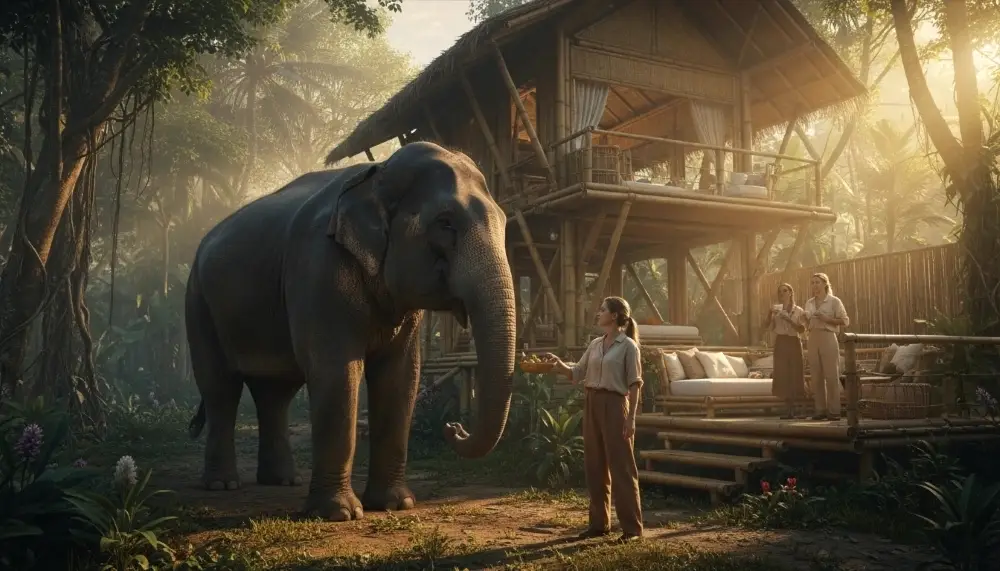
Elephant Hills holds a position that no other lodge in Thailand can credibly challenge: it is simultaneously the most awarded eco-camp in the country and one of the most genuinely adventurous. Built on the African safari tent concept and dropped inside Khao Sok, it delivers luxury without compromise on the wildlife experience. Guides are TAT-licensed, elephant interactions follow a strict no-riding policy, and the tented rooms are properly mosquito-proofed with real beds and hot showers.
The standout option is the 3-Day Jungle Lake Safari, which includes a night at The Elephant Camp followed by a second night at their floating Lake Camp on Cheow Lan Lake. Waking up on water surrounded by 900-metre limestone towers is as dramatic as Thailand gets.
Prices (2026): 2-Day Jungle Safari from 13,875 THB (approx. $390 USD) per adult, all-inclusive. The 3-Day Jungle Lake Safari starts from around 22,410 THB (approx. $630 USD) per adult. The premium 4-Day Jungle and Lake package runs from 34,000 THB (approx. $955 USD) per adult, completely all-inclusive including transfers from major southern hubs.
Klook and Get Your Guide both list Elephant Hills day connections, but for the multi-night packages book direct through the Elephant Hills website to lock in the guaranteed departure calendar. The camp accepts cash only on-site, so factor that into your travel wallet. AirHelp is worth noting for the Surat Thani or Phuket flight legs getting here, given the smaller regional aircraft involved.
2. Cheow Lan Lake Floating Bungalows, Khao Sok (Budget to Mid-Range)
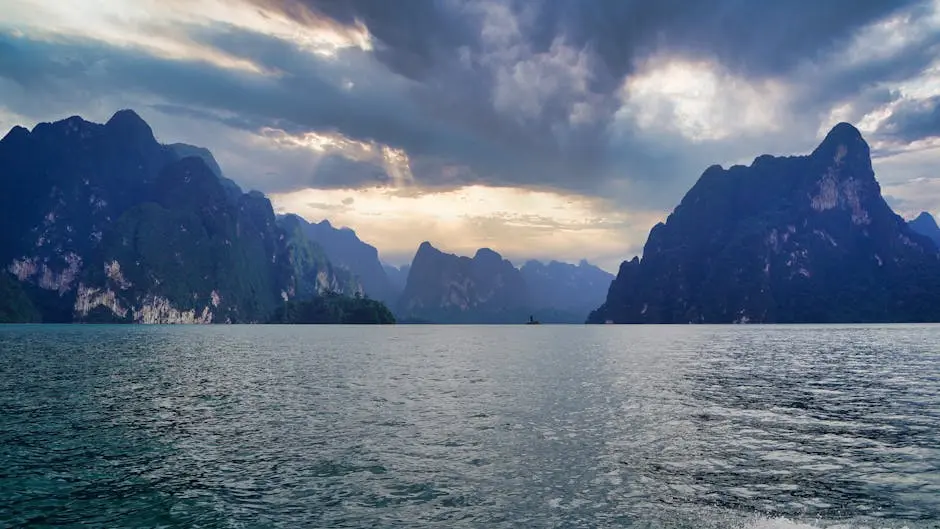
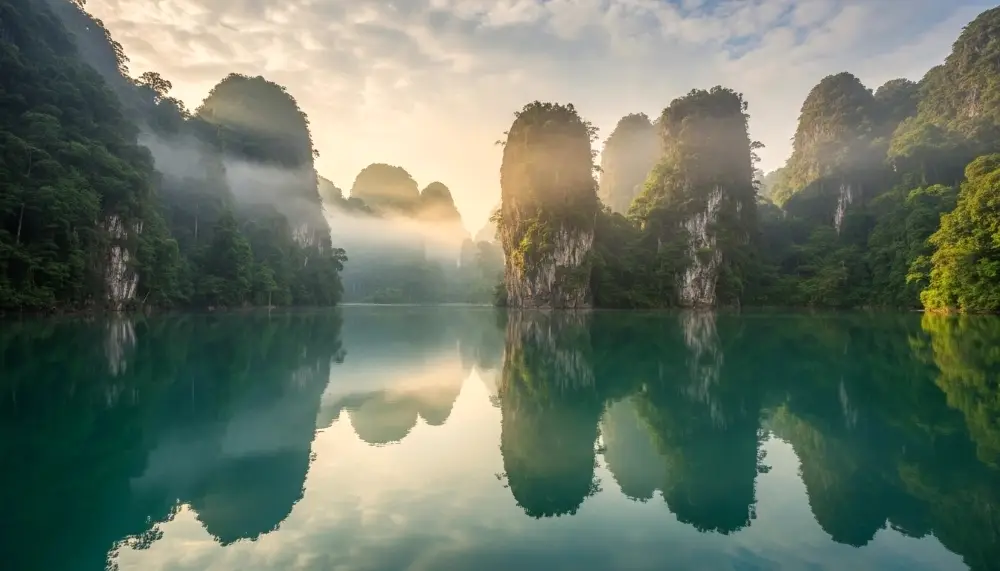
If Elephant Hills represents the premium end of the Khao Sok experience, the independent floating raft houses on Cheow Lan Lake represent its soul. These are the original accommodation here: bamboo platforms tethered to the lake surface, open-air rooms, shared bathrooms, and one of the most surreal natural settings on the planet. There are 14 floating bungalow operations spread across the lake’s various inlets, ranging from basic bamboo to fully air-conditioned teak luxury villas.
The most popular approach is a 2-day, 1-night tour that includes the boat transfer from Ratchaprapha Dam pier, kayaking, guided jungle trekking, and all meals. Budget bamboo options run around 3,600 THB (approx. $101 USD) per person for the full two-day package. Superior and modern tier raft houses cost roughly 5,500 to 8,000 THB (approx. $155 to $225 USD) per person. Luxury floating villas like the Panvaree push upwards of 12,000 THB (approx. $337 USD) per person for the overnight package.
These spots book out fast during peak months. Lock in your dates through 12GO or Klook well in advance, particularly around Thai public holidays. Connectivity is essentially zero on the lake, so download offline maps before you depart Khao Sok village. Mobile signal returns when you reach Surat Thani on departure.
3. Our Jungle House, Khao Sok Village (Best Mid-Range Value)
Running ecotourism operations in Khao Sok for over two decades, Our Jungle House sits on 25 acres of privately owned rainforest within walking distance of Khao Sok National Park‘s entrance. Three species of monkey visit the grounds regularly. The treehouse bungalows and stilted jungle rooms are genuinely embedded in the canopy rather than positioned nearby it. Fan-cooled rooms follow the property’s eco ethos, while Western toilets and hot showers keep things practical.
What separates it from the village guesthouses is the activity programme: night safaris, tubing down the Sok River, guided jungle treks, elephant bathing (no riding), and day trips to Cheow Lan Lake. The knowledgeable on-site team can arrange the lake tour and have all the current conditions on the lake crossings that no booking website will give you.
Prices: Fan-cooled treehouse bungalows from around 1,800 to 2,800 THB (approx. $50 to $79 USD) per night. Air-conditioned deluxe rooms run 3,500 to 4,500 THB (approx. $98 to $126 USD) per night. Compare rates on Agoda and Booking.com before booking, as prices vary meaningfully between the two platforms for this property.
4. Fern Resort, Mae Hong Son (North Thailand’s Best Kept Secret)
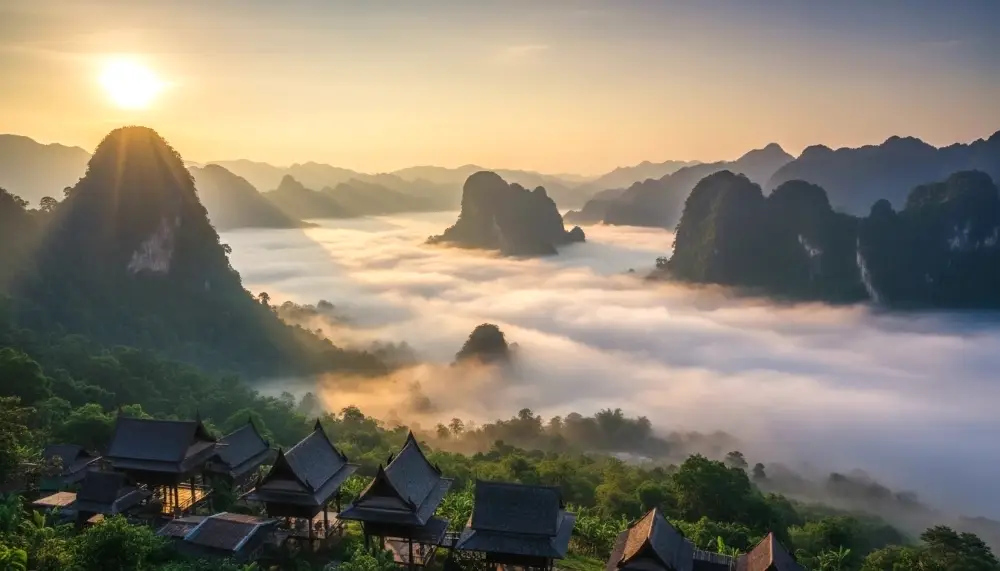
Mae Hong Son is one of northern Thailand’s most remote provincial capitals, tucked inside a mist-filled valley surrounded by steep jungle-clad peaks near the Myanmar border. Fern Resort has been the benchmark eco-lodge here for years, and its TripAdvisor ranking as the number one specialty lodging in the province is not hype. Thirty Shan-style wooden bungalows are scattered across landscaped gardens that blur naturally into the surrounding national park. Underground electricity cables and oil-burning torches preserve the atmosphere after dark.
The resort employs Shan and Karen staff from the surrounding villages, the breakfast buffet uses local produce, and the Rice Terrace Bar looks out over rice paddies at dusk. Adventure activities nearby include Mae Hong Son Loop trekking, caves, hill tribe village visits, and bamboo rafting on the Pai River. This is the lodge for travellers who want something genuinely off the tourist trail without giving up the comfort of a real bed.
Prices: Shan-style bungalows from approximately 1,249 THB (approx. $35 USD) per night in low season, rising to 2,800 to 4,200 THB (approx. $79 to $118 USD) in peak months. Check both Agoda and Booking.com for the best rates. The free shuttle from Mae Hong Son Airport removes the need for a taxi, saving around 200 to 300 THB (approx. $6 to $8 USD) per trip. Families using Welcome Pickups from the airport will find the service connects well to Fern Resort for arrival transfers.
5. Anurak Community Lodge, Khao Sok (Boutique Eco for Conscious Travellers)
Anurak Community Lodge in Khao Sok village takes a different approach to most jungle properties. Stand-alone bungalows are positioned within the canopy rather than around a central resort pool, and the community ethos is built into every decision: guides are local, food is sourced from surrounding villages, and the lodge feeds revenue directly back into conservation projects in the national park. Couples and solo adventure travellers consistently rate it as the most atmospheric mid-range option in the area.
The activity offering is comprehensive: guided night walks, cave exploration, bird watching, canoe safaris on the Sok River, and day trip connections to Cheow Lan Lake. The lodge team is particularly good at tailoring multi-day itineraries for guests who want to combine different activity types without using a third-party tour company.
Prices: Jungle bungalows from around 3,200 to 5,500 THB (approx. $90 to $155 USD) per night. Book through Agoda for the best regional rates. Digital nomads and remote workers should note the lodge has reliable Wi-Fi in common areas, though private bungalow signal varies. NordVPN running on your devices makes a meaningful difference when using the shared resort network for banking or client portals.

From classic Thailand highlights to
hidden-gem private tours. Cancel
free up to a day before your
start time if plans change.
Lodge Comparison at a Glance:
Choosing between these lodges mostly comes down to budget, travel style, and how much guided structure you want versus independent freedom.
| Lodge | Location | Price Per Night / Package | Best For |
|---|---|---|---|
| Elephant Hills | Khao Sok | From 13,875 THB / $390 USD (2-day all-in) | Families, couples, first-timers |
| Cheow Lan Floating Raft Houses | Khao Sok Lake | From 3,600 THB / $101 USD (2-day package) | Backpackers, solo travellers |
| Our Jungle House | Khao Sok | From 1,800 THB / $50 USD per night | Budget to mid-range, wildlife fans |
| Fern Resort | Mae Hong Son | From 1,249 THB / $35 USD per night | Culture seekers, off-trail explorers |
| Anurak Community Lodge | Khao Sok | From 3,200 THB / $90 USD per night | Eco-conscious couples, nomads |

Compare hotel prices across Thailand’s
best areas and book with confidence.
Filter by budget, location, or score
to find the right stay for your trip.
What to Do Around These Lodges:
The lodges are the base, but the jungle around them is where the real experience happens. In Khao Sok, the standard activities on offer from most properties include kayaking and canoe safaris on the Sok River, guided night treks for wildlife spotting (gibbons, hornbills, civets, and the occasional clouded leopard track), cave exploration at Tham Nam Thalu, and boat tours on Cheow Lan Lake. The lake in particular delivers a level of visual drama that photographs very poorly compared to the actual experience of being there.
In Mae Hong Son, activity options broaden to include the famous Mae Hong Son Loop motorcycle or minivan circuit, visits to the long-neck Karen villages (approach with thoughtful tourism intent), bamboo rafting, and the stunning Tham Pla fish cave. Many of these can be pre-booked through Get Your Guide and Klook to secure guides and prices ahead of arrival, avoiding the walk-in mark-ups that occur at peak periods.
The dry season window for the northern highlands around Mae Hong Son (roughly November to April) aligns well with a southern circuit combining Khao Sok. Combining these two regions into a single two-week itinerary gives you both the ancient northern forest and the karst southern rainforest in one journey.

From short trips to long stays in Thailand,
Airalo has flexible eSIM data plans
you install in minutes. Top up
remotely if you need more data.
Pro Tips for Jungle Lodge Travel:

Getting Here: Use Grab or Bolt for transport to the Khao Sok minivan departure points from Surat Thani. Airport arrivals benefit from activating a Yesim or Airalo eSIM before landing so app verification codes arrive without delay. Families arriving with luggage will find Welcome Pickups worth the modest premium for a named driver and child-seat confirmation. For the Mae Hong Son circuit, 12GO handles the Chiang Mai to Mae Hong Son bus and minivan combinations, with advance booking protecting you against sold-out services around Thai public holidays.
Accommodation: Agoda consistently delivers better rates on jungle properties than international platforms. Cross-check Booking.com for any given lodge before confirming, as prices for boutique eco-properties can differ by 10 to 20% between the two. For Elephant Hills multi-night packages, book direct.
Insurance: Ensure your travel insurance explicitly covers jungle trekking and river-based activities. Standard policies often exclude guided wilderness treks and night safari activities. SafetyWing Nomad Insurance is the go-to supplementary option for remote workers and extended-stay travellers, covering healthcare in Thailand at a fraction of standard expat plan costs.
Connectivity: Most lodge properties have common-area Wi-Fi. Personal bungalow signal is unreliable everywhere on this list except in Khao Sok village itself. Yesim and Airalo eSIM plans use AIS and True Move networks, which have the strongest rural 4G footprint. Run NordVPN on all devices when connected to any shared resort or cafe network.
Pack right: A 40-litre bag is ideal. Bring leech socks for wet-season trekking (available at any Khao Sok village shop for around 80 THB / $2.25 USD), reef-safe insect repellent, and a dry bag for river and lake activities. Quick-dry clothing reduces laundry friction significantly when moving between properties.

Maps, Grab, translation apps all need
data in Thailand. Yesim’s eSIM installs
in a minute and gives you reliable
5G from the moment you arrive.
Jungle Lodges for Digital Nomads and Remote Workers:
Khao Sok village has quietly become a genuine short-stay remote work destination. The central cluster of guesthouses and mid-range properties all run reasonably stable fibre connections, and the village is compact enough to walk everywhere. The Anurak Community Lodge and Our Jungle House both have common areas suitable for focused work in the mornings, with afternoons freed up for activities. Fern Resort in Mae Hong Son is slightly more isolated from town but runs a free shuttle for those who prefer a town co-working space.
For stays of one week or more, a rolling Saily or Airalo eSIM data plan removes dependence on any single property’s broadband. NordVPN across all devices is strongly recommended for anyone handling client work or banking from these shared networks. SafetyWing’s Nomad Insurance covers Thai healthcare at a monthly cost that makes meaningful medical cover accessible even on a modest remote work income.

The Experience You Won’t Forget:
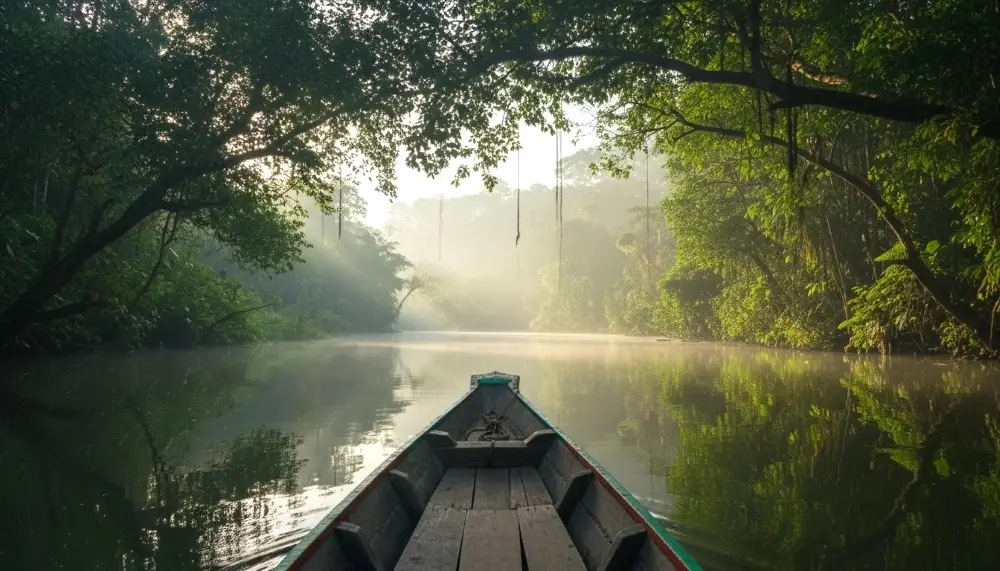
There is a specific moment that most jungle lodge guests describe in almost identical terms. It usually arrives on the second morning. You wake before your alarm to something moving outside the bungalow. It turns out to be a family of dusky langurs passing through the canopy twenty metres overhead, completely indifferent to your presence. No tour guide, no ticket, no schedule. Just the forest going about its business.
That moment does not happen at a beach resort. It happens here, in lodges built by people who genuinely love the forest and want others to understand why it matters. Thailand’s jungle is older than almost anything else on the planet. These lodges give you a way in.
Whether you have two days between island hops or two full weeks in the highlands, the properties in this guide will meet you at whatever budget and pace works for your trip. Sort your eSIM before departure, pre-book your guided day tours through Klook or Get Your Guide, lock in your first two nights on Agoda, and let the forest do the rest.
Frequently Asked Questions:
What is the best time of year to visit jungle lodges in Thailand?
For Khao Sok and southern jungle lodges, the dry season from December to April offers the most reliable trekking conditions and clearest lake visibility. That said, Elephant Hills operates year-round and designs its tour programme specifically for wet-season conditions. The northern highlands around Mae Hong Son are best visited between November and March, when mist fills the valley at dawn and temperatures stay comfortably cool. Avoid the July to September window for Khao Sok if you want guaranteed river activity access.
Are Thailand jungle lodges safe for solo female travellers?
Yes, the properties in this guide are well-established and well-staffed operations with years of international visitor experience. Guided activities mean you are never hiking alone in remote wilderness. Solo female travellers regularly rate Fern Resort and Anurak Community Lodge as particularly welcoming bases. The standard precautions apply: keep your Airalo or Yesim eSIM active for continuous connectivity, use Grab rather than unlicensed drivers for transport to and from the lodges, and book accommodation in advance so arrival logistics are confirmed.
How do I get from Phuket or Krabi to Khao Sok National Park?
The most comfortable option is a private minivan transfer, which takes around 2.5 to 3 hours from Phuket and roughly 2 hours from Krabi. Prices run from around 500 to 800 THB (approx. $14 to $22 USD) per person on shared services. Elephant Hills includes shared transfers from Phuket, Krabi, Khao Lak, Surat Thani, and Koh Samui in their package price, which removes this logistics step entirely for guests booking their camp. For independent travellers, 12GO books the shared minivan services in advance with e-ticket confirmation.
Can children stay at Thailand jungle lodges?
Most properties welcome children, with a few practical caveats. Elephant Hills accepts children from 4 years old and above, with dedicated family tent configurations and child pricing from around 6,938 THB (approx. $195 USD) for the 2-day tour. Our Jungle House and Fern Resort both welcome families with younger children given their more relaxed, grounds-based style. The Cheow Lan Lake floating bungalows are suitable for older children and confident swimmers but require an honest assessment of your child’s comfort with open water and wooden platform walkways.
Is there mobile signal at Thailand’s jungle lodges?
Signal varies considerably. Khao Sok village itself has reliable 4G on AIS and True Move networks. The floating bungalows on Cheow Lan Lake have essentially no signal once you leave the pier area. Our Jungle House and Anurak Lodge in the village fringes have patchy personal bungalow coverage. Mae Hong Son town has 4G, but the road to Fern Resort drops in and out. Download offline maps, pre-load any bookings, and activate your Yesim, Saily, or Airalo eSIM before departure so GPS and emergency communication work across all these locations.
What is the difference between a standard tour and the Elephant Hills all-inclusive package?
A standard jungle day tour from Khao Sok village to Cheow Lan Lake costs roughly 1,800 to 2,500 THB (approx. $50 to $70 USD) per person including transport, boat, and lunch. You stay in Khao Sok village overnight and join another group the following day. The Elephant Hills package combines luxury tented accommodation, all meals, all guided activities including the ethical elephant experience, and professional English-speaking TAT-licensed guides into a single fully-managed experience. The premium reflects genuine value for travellers who want a seamless adventure without coordinating multiple operators.
What should I pack for a stay at a Thailand jungle lodge?
The essentials are quick-dry clothing, a lightweight waterproof jacket, leech socks for wet-season trekking (available in Khao Sok village for around 80 THB / $2.25 USD), DEET insect repellent, a dry bag for river activities, and solid closed-toe shoes or trail sandals. Flip-flops are fine for lodge grounds but not for guided walks. Cash in smaller THB denominations is important, as jungle lodges and village activity operators rarely accept cards. Elephant Hills specifically accepts cash only on-site. A headtorch is worth carrying for night activities, though most lodge guides carry spares.
Do I need travel insurance for jungle activities in Thailand?
Absolutely, and the policy wording matters here. Standard policies frequently exclude guided jungle treks, river activities, and night safaris. Read the small print for exclusions around adventure activities and check that emergency medical evacuation is included. The cost of airlifting from a remote national park to Surat Thani or Phuket hospital can reach 150,000 THB or more. SafetyWing Nomad Insurance is a practical supplementary option for longer stays, covering Thai healthcare at a fraction of standard expat plan costs and specifically designed for remote travel scenarios.
Are there jungle lodges near Chiang Mai for a shorter visit?
Yes. The Mae Kampong village area east of Chiang Mai offers a cluster of forest homestays and small eco-lodges from around 800 to 1,500 THB (approx. $22 to $42 USD) per night, accessible in roughly 1.5 hours from the city. Elephant Hills also runs a 2 and 3-day Bush Camp option from Chiang Mai combining ethical elephant experience with forest walking and overnight tented accommodation. Get Your Guide and Klook both list day-tour connections from Chiang Mai to Doi Inthanon and surrounding forest areas for travellers with only a single day available.
How do the floating bungalows on Cheow Lan Lake compare to staying at Elephant Hills?
They serve different travellers. The floating bungalows are a raw, immersive experience: open-air bamboo platforms, basic facilities, and a level of exposure to the jungle environment that feels genuinely wild. Budget options start from around 3,600 THB (approx. $101 USD) for a 2-day package. Elephant Hills delivers the same spectacular lake setting through luxury safari tents with real beds, hot showers, gourmet meals, and expert guided programming from 13,875 THB (approx. $390 USD) per person for the 2-day all-inclusive package. Many seasoned travellers do both: a night on the independent raft houses and a subsequent Elephant Hills tour on the same trip.