Overlanding Isan: A 4×4 Guide to Thailand’s Most Rugged and Remote Region
This site contains affiliate links. We may earn a commission at no extra cost to you.
There is a version of Thailand that does not appear on most travel itineraries. No beaches, no island ferries, no full moon parties. Just red laterite roads cutting through cassava fields, limestone karst towers rising out of rice paddies, ancient Khmer temples crumbling quietly in the heat, and a sense of space that the more visited parts of the country have completely surrendered to tourism.
That version of Thailand is Isan. The northeast plateau covers roughly a third of the country’s land area, bordered by the Mekong River to the north and east, Laos across the water, and Cambodia beyond the southern rim. It is home to around 22 million people, the heartland of Thai folk culture, and arguably the best destination in the country for serious overlanding.
A 4×4 changes what is possible here completely. It opens routes that buses cannot reach, villages that see foreign faces perhaps a few times a year, and national parks where the trails are genuine tracks rather than groomed tourist paths.
Why Isan Rewards the Overlander
The flat-to-rolling terrain of the Khorat Plateau sounds unexciting on paper. In practice, the landscape is far more varied than it looks on a map. The Phu Phan mountain range in Sakon Nakhon and Kalasin provinces rises to nearly 700 metres and holds forest tracks that demand low-range gearing during the wet season.
The Mekong riverbank route from Nong Khai to Chiang Khan involves a string of switchbacks, riverside dirt sections, and temple approach roads that reward patience and clearance. The southern Isan border region near Si Saket and Surin conceals Khmer sites accessible only by unmarked tracks through sugarcane fields.
Isan also rewards the overland traveller socially in a way the tourist belt rarely does. The people here are Lao-Thai in culture and language, warm, curious about strangers arriving by vehicle rather than tour bus, and almost universally hospitable. Pulling into a village in a properly equipped 4×4 tends to generate friendly attention rather than vendor pressure. That distinction matters after a few weeks on the road.

Reserve your Isan hotel with no
upfront payment on most rooms.
Free cancellation up to a day before
keeps your trip flexible if plans shift.
Vehicle Choice and Rental: What Actually Works Here
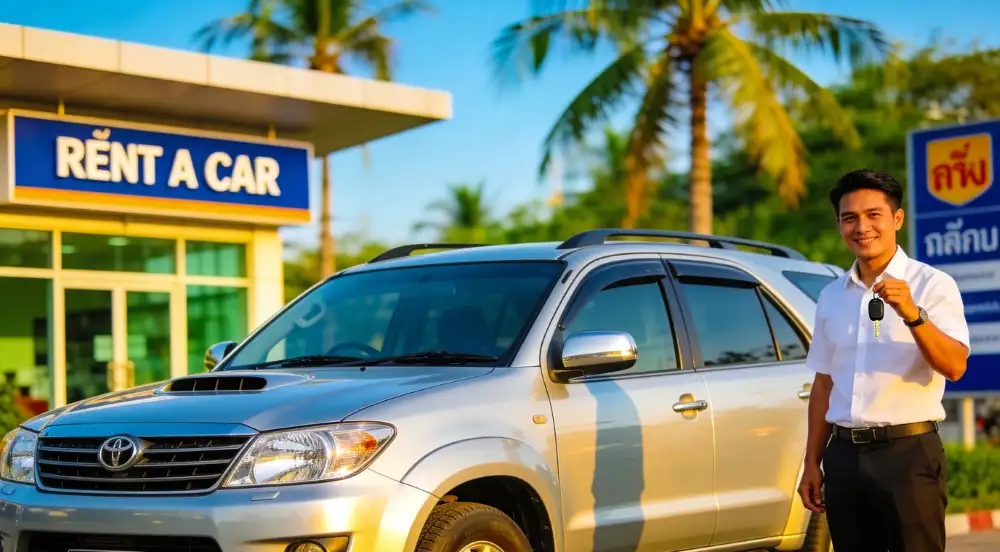
The Toyota Hilux Revo is the default overland vehicle in Thailand and it earns that status. It is everywhere, meaning parts and mechanical knowledge are available in even small provincial towns. A standard double-cab 4×4 Revo in decent condition rents for approximately 1,800 to 2,500 THB per day (roughly $50 to $69 USD) from reputable operators in Khon Kaen, Udon Thani, or Korat (Nakhon Ratchasima). Weekly rates drop the per-day cost by 15 to 20 percent.
For serious backcountry use, you want to confirm a few things before signing anything: that the vehicle has a working low-range transfer case, that the spare tyre is in genuinely usable condition (not a space-saver), and that the rental agreement covers off-road use explicitly. Many standard rental contracts in Thailand exclude dirt-road damage. Read the small print or negotiate a specific off-road addendum before you collect the vehicle.
If you are arriving by air, Khon Kaen Airport (KKC) is the most practical gateway for a central Isan overland base. Udon Thani (UTH) works better for those starting on the northern Mekong route. Both airports are served by multiple daily flights from Bangkok’s Don Mueang. For group arrivals with significant gear, Welcome Pickups offers pre-negotiated fixed transfers from the airport to your first overnight stop, removing the hassle of negotiating with unlicensed drivers while managing luggage and equipment on arrival.

From classic Isan highlights to
hidden-gem private tours. Cancel
free up to a day before your
start time if plans change.
The Four Core Overland Routes
Isan is large enough that trying to cover everything in one trip guarantees you do nothing justice. Most overlanders pick one or two anchor routes and build their days around them. Here are the four that consistently deliver the most distinctive experiences.
1. The Mekong River Road (Nong Khai to Chiang Khan)
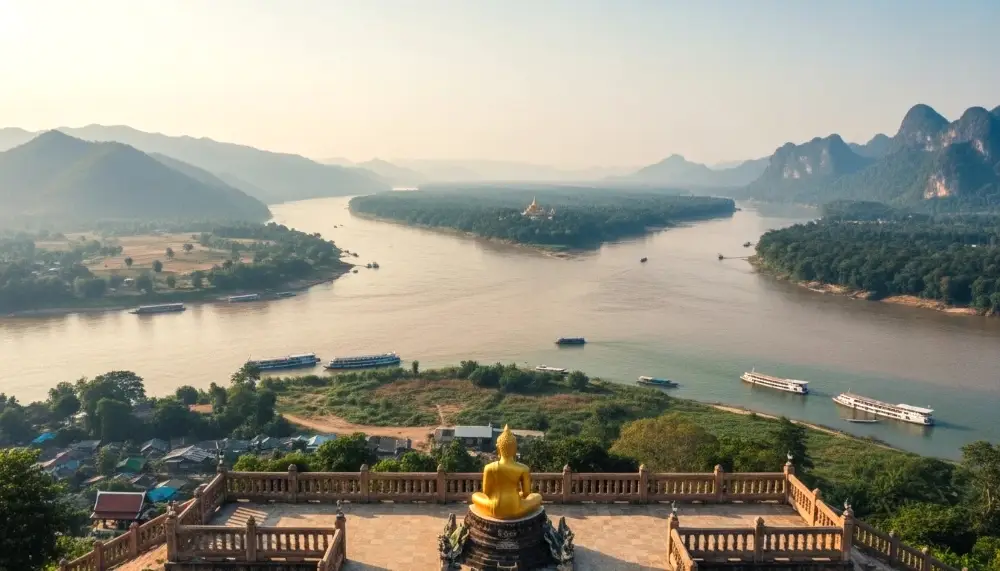
This is the showpiece route. The R212 follows the Mekong from Nong Khai westward through Beung Kan, Nakhon Phanom, Mukdahan, and eventually loops back via Loei Province down through Chiang Khan to the western edge of the plateau. The sealed road sections are straightforward.
The interest lies in the detours: river access tracks to isolated riverside temples, unpaved roads into Phu Wua Wildlife Sanctuary, and the approach road to the That Phanom temple complex across a causeway that floods to the axles after heavy rain.
Budget 7 to 10 days for the full loop. Daily costs along this route run approximately 2,800 to 3,500 THB ($78 to $97 USD) covering guesthouse accommodation, fuel, and meals from local markets and roadside restaurants. Accommodation in Nong Khai and Chiang Khan has genuinely good options at mid-range prices; Agoda consistently surfaces better rates for the riverside guesthouses along this corridor than international platforms.
2. The Loei Highland Loop
Loei Province in the northwest corner of Isan sits at higher elevation than the plateau and experiences genuine winter temperatures from November to February, sometimes dropping below 5 degrees Celsius at night on the peaks. This is Thailand’s version of mountain country and it looks and feels completely different from the rest of the region.
Phu Kradueng National Park sits at the centre of this route. Vehicle access ends at the base; the park plateau itself is foot access only, via a 9-kilometre trail that gains 800 metres of elevation. Day hikers pay 200 THB ($5.60 USD) entry.
The Phu Luang Wildlife Sanctuary to the south requires advance permits from the Department of National Parks in Bangkok, best arranged through a local operator in Loei town around two weeks ahead. The approach road to the sanctuary boundary is one of the genuinely challenging 4×4 tracks in Isan, particularly between July and September when the red laterite surface turns into a slick clay channel.
3. The Khmer Temple Circuit (Buriram, Surin, Si Saket)
Southern Isan holds the most significant concentration of Khmer archaeological sites outside Cambodia itself. Prasat Hin Phimai near Nakhon Ratchasima is the most famous and the most visited, with a formal entrance fee of 100 THB ($2.80 USD) and good infrastructure. The genuinely interesting overland work happens further east, where smaller Khmer prasats sit in states of partial ruin at the end of unsigned tracks through rice paddies and rubber plantations.
Prasat Hin Khao Phanom Rung in Buriram Province requires a 17-kilometre access road from Highway 24 and sits atop an extinct volcano with views that span into Cambodia on clear days. Prasat Ta Muen Thom on the Cambodian border is accessible via a rough track through Surin Province and requires a military checkpoint clearance due to its border location. Local operators in Surin can arrange the paperwork efficiently. Budget 5 to 7 days for a thorough circuit of the major sites with off-road detours to the smaller ones.
4. The Phu Phan Mountain Traverse
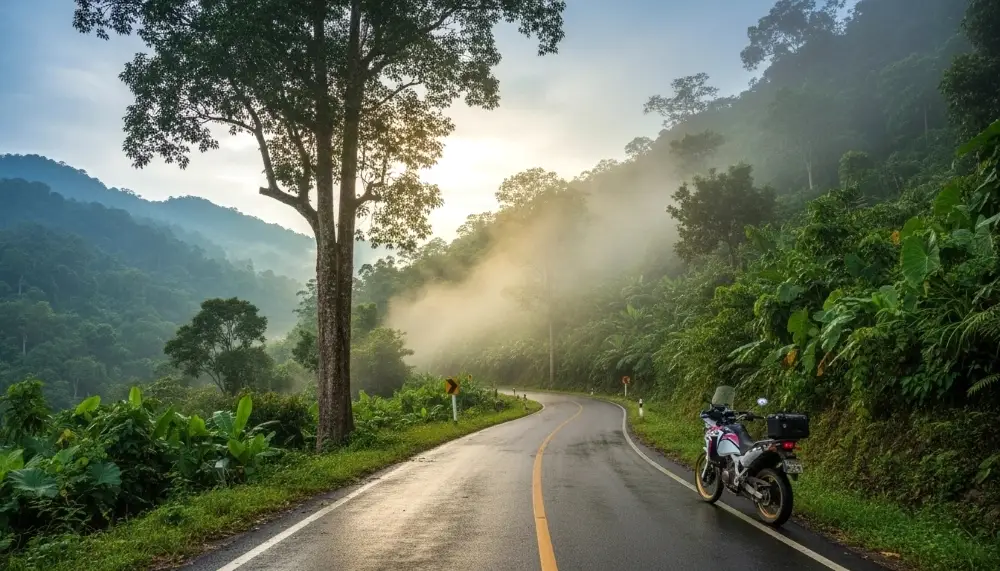
The Phu Phan range in Sakon Nakhon and Kalasin provinces is the least-visited of the four routes and arguably the most rewarding for serious off-road enthusiasts.
The mountains hold dense dry dipterocarp forest, a network of park service tracks, and several waterfalls that see almost no international visitors. Phu Phan National Park charges 100 THB ($2.80 USD) entry and has basic bungalow accommodation at the park headquarters for 600 to 900 THB ($17 to $25 USD) per night.
The cross-range track between Sakon Nakhon and Kalasin is seasonal. Between November and May it is manageable in a standard Hilux. From June to October sections become deeply rutted and require recovery equipment. If you are travelling in the wet season without a snatch strap, rated shackles, and a decent high-lift jack, stay on the sealed road. The forest is beautiful but the nearest recovery truck is several hours away.
Route Comparison at a Glance
| Route | Duration | Difficulty | Daily Spend (THB) | Daily Spend (USD) |
|---|---|---|---|---|
| Mekong River Road | 7 to 10 days | Easy to moderate | 2,800 to 3,500 THB | $78 to $97 USD |
| Loei Highland Loop | 5 to 7 days | Moderate to hard | 3,000 to 4,000 THB | $83 to $111 USD |
| Khmer Temple Circuit | 5 to 7 days | Easy to moderate | 2,500 to 3,200 THB | $69 to $89 USD |
| Phu Phan Traverse | 4 to 6 days | Hard (wet season) | 2,200 to 3,000 THB | $61 to $83 USD |
Connectivity and Navigation: What You Actually Need
Google Maps handles the sealed road network in Isan reasonably well. Off it, coverage becomes unreliable and occasionally actively misleading, routing you toward tracks that do not exist or have been impassable for years. Maps.me with the Thailand offline pack is the more reliable tool for secondary and tertiary roads. Download it before you leave your last major town. For the Phu Phan and Phu Luang areas specifically, having a GPX file from a recent traveller who has done the route is worth more than any mapping app currently available.
Mobile signal across Isan is better than its reputation suggests. AIS has the strongest rural coverage on the plateau. True Move performs better in the Loei highlands. However, signal disappears entirely inside the larger national park interiors and on some of the longer cross-country tracks.
The critical step is to activate your Airalo, Yesim, or Saily eSIM data plan before departure from home rather than at the airport. Dominant local apps including Grab require SMS network verification the moment you open them, and that code will not arrive if you are standing in a Khon Kaen car park with an unactivated SIM. Having data live from arrival means navigation, translation apps, and fuel-station finders all work from the moment you collect the vehicle.
For anyone working remotely between driving days from guesthouse or cafe connections, NordVPN across all devices is the practical standard for banking and client portal security on shared networks throughout the region.


Pick a Isan eSIM plan that matches
your trip length on Airalo’s global
marketplace. Install before departure
and you’re online the moment you land.
Fuel, Mechanics, and Breakdown Reality
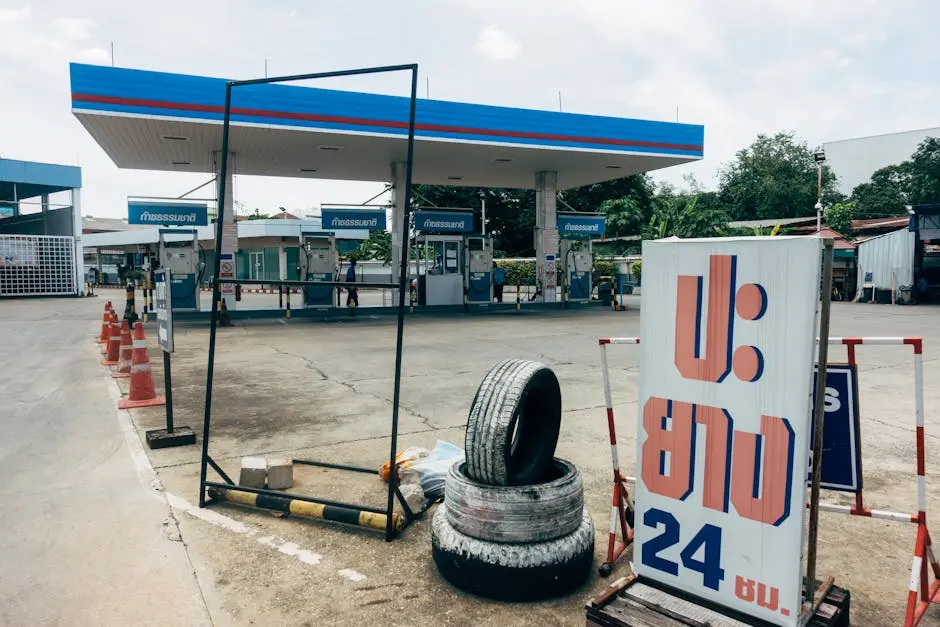
Diesel is the fuel of choice for the Hilux and it is available at PTT, Shell, and Caltex stations throughout the province capitals and most district towns. Current diesel pricing sits at approximately 30 to 33 THB per litre ($0.83 to $0.92 USD), making a full 80-litre tank cost around 2,400 to 2,640 THB ($67 to $73 USD). On remote routes, the gap between stations can exceed 120 kilometres. Fill up whenever the gauge drops below half on a backcountry day. Carrying a 20-litre jerry can as reserve is not excessive for the Phu Phan and Phu Luang routes.
Mechanical help in Isan is more accessible than you might expect. Every district town of any size has at least one Toyota-familiar workshop. Thai mechanics are extraordinarily resourceful and a surprising number of field repairs can be completed with basic tools and parts sourced from provincial auto shops. The vocabulary to know: “rot sia” means the car is broken, “chang” means mechanic, and “yang taek” means flat tyre. Carrying a Thai-English translation screenshot of these terms on your phone costs nothing and eliminates a lot of confusion at the roadside.

From temples to island tours, Klook
covers Isan’s best experiences.
Hotel pickup is often included and
prices beat the pier walk-in rate.
Where to Sleep: Accommodation Across the Plateau
Isan accommodation follows a clear pattern that rewards the adaptable traveller. Province capital cities (Khon Kaen, Udon Thani, Korat, Ubon Ratchathani) have a genuine range from budget guesthouses at 350 to 600 THB ($10 to $17 USD) through to comfortable mid-range hotels at 900 to 1,800 THB ($25 to $50 USD) per night. These are the places to do laundry, service the vehicle, stock up on supplies, and sleep properly before the next backcountry stretch.
District towns offer basic Thai-style guesthouses at 300 to 500 THB ($8 to $14 USD) a night. Rooms are clean, functional, and rarely have hot water. The trade-off is that these places are where you eat genuinely local food, sleep to the sound of monks chanting the morning prayers at the temple next door, and wake up to a market that has been running since 5:00 AM. National park bungalows, where available, run 600 to 1,200 THB ($17 to $33 USD) and must be booked through the Department of National Parks website, which has improved significantly in English usability over the last two years.
Agoda covers the province capitals well and consistently beats Booking.com on rates for the mid-range business hotels in Khon Kaen and Udon Thani. For the smaller district guesthouses, walk-in or phone booking is still the norm. Carrying 1,000 THB in small bills for deposits at guesthouses that do not take cards is practical across all of Isan.
Eating in Isan: The Best Food in Thailand, Honestly
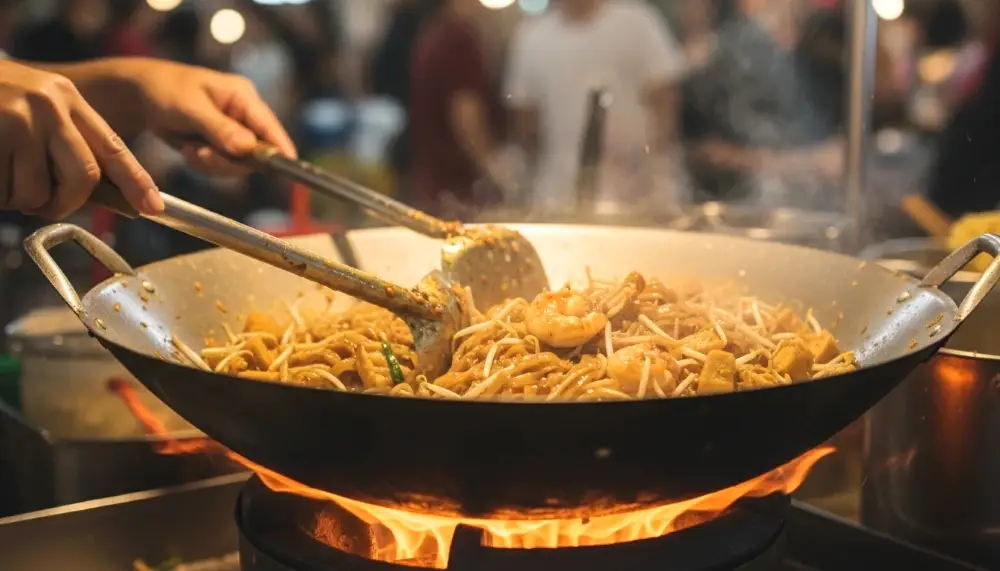
This is not a diplomatic statement: Isan food is the most interesting regional cuisine in Thailand and the overlanding traveller gets to eat it as it is actually made, rather than the softened versions served to tourists in Bangkok restaurants. Som tam (green papaya salad) here is fermented, fiery, and nothing like the mild version on Khao San Road. Larb is made with fresh blood in its traditional form. Grilled river fish wrapped in banana leaf with lemongrass and galangal is ordered by pointing at the smoke rather than reading a menu.
A full meal at a roadside restaurant or market stall costs 60 to 120 THB ($1.70 to $3.30 USD). Sticky rice, which is the Isan staple rather than jasmine rice, comes free or costs 10 THB for a bamboo basket. Budget travellers eating exclusively from markets and roadside stalls can feed themselves well for 300 to 400 THB ($8 to $11 USD) per day. The cooking class options in Khon Kaen and Udon Thani listed on Klook are worth booking for a half-day layover if you want to bring recipes home.

Saily’s Isan eSIM costs less than
most tourist SIMs charge per day.
Easy install, transparent pricing,
and solid NordVPN infrastructure.
Permits, Border Areas, and What to Know
Several areas along the Mekong and the Cambodian border require either a military checkpoint clearance or prior notification to local authorities. This sounds more bureaucratic than it is in practice. Checkpoints are staffed by friendly soldiers who want to see your passport, note your vehicle registration, and send you on your way in under five minutes. The formality exists because of historical sensitivities around cross-border movement in these areas. Cooperate cheerfully and the process is genuinely painless.
Wildlife sanctuary access at Phu Luang requires advance permits from the Department of National Parks headquarters in Bangkok. The standard processing time is 10 to 14 days and the permit specifies your entry date, vehicle registration, and number of occupants. Local operators in Loei town handle this efficiently for a service fee of around 500 to 800 THB ($14 to $22 USD) and it is absolutely worth paying rather than attempting to navigate the Thai-language government portal independently.
Driving a rental vehicle across the border into Laos is not permitted under standard Thai rental agreements. If a cross-border extension is part of your plan, you need to arrange this specifically with the rental operator before departure, and very few standard operators offer it. Nong Khai to Vientiane crossings are straightforward for foot passengers; vehicle crossings require additional documentation that takes time to arrange.
Essential Overland Kit and Practical Tips:
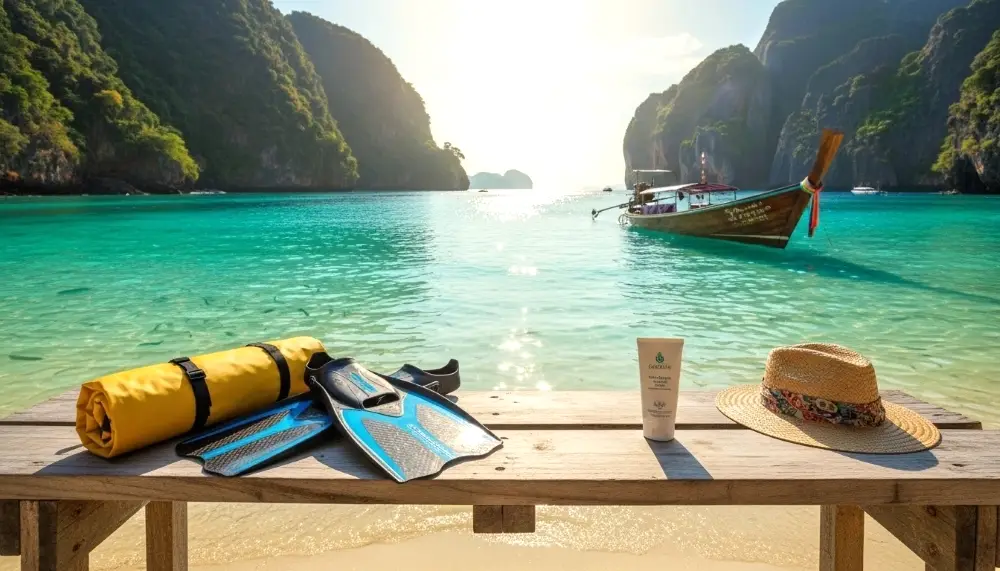
Recovery gear minimum: Snatch strap rated to at least 8,000 kg, two bow shackles, a high-lift jack with a base plate for soft ground, and a traction board if you plan wet-season off-road work. This kit weighs under 15 kg and fits in the spare wheel well.
Water: Carry a minimum of 10 litres per person for backcountry days. Refill at petrol stations and convenience stores in district towns. Tap water throughout Isan is not safe to drink without filtration.
Finance: Isan runs on cash far more than tourist Thailand. The ATM fee across Thai machines is a standard 220 THB ($6 USD) per withdrawal. Withdraw generously in province capitals. Always choose Continue Without Conversion at ATMs to let your home bank handle the exchange rather than accepting the machine’s rate.
Insurance: Ensure your travel policy covers self-drive 4×4 use and specifies off-road activity. Many standard policies exclude unpaved road incidents. Confirm emergency evacuation cover is included. Remote workers on longer Isan stays should look into SafetyWing’s Nomad Insurance as a supplementary layer for healthcare scenarios standard travel policies do not address.
Intercity bus backup: On the occasions when the vehicle needs a rest day for servicing, 12GO Asia covers the intercity bus and train network across Isan comprehensively. The overnight train from Ubon Ratchathani to Bangkok is a legitimate pleasure and worth building into the itinerary deliberately rather than as an emergency fallback.
Booking excursions: For guided day trips to major Khmer sites or Mekong boat excursions, Get Your Guide and Klook both list verified Isan operators, though selection is thinner here than in the south. Local tourism offices in Khon Kaen and Ubon Ratchathani are genuinely helpful for arranging access to more obscure sites that have not reached the international booking platforms yet.
The Honest Case for Going Slow
The temptation with a 4×4 and an open map is to cover ground. Isan rewards the opposite instinct. The travellers who come back with the most vivid experiences are almost universally the ones who spent three nights somewhere they had not planned to stay, because a local invited them to a village festival, or because the forest track turned into something worth exploring on foot for an afternoon.
The region hosts several of Thailand’s most atmospheric festivals, including the Rocket Festival in Yasothon in May (a genuinely extraordinary rural celebration), the Phi Ta Khon ghost festival in Dan Sai, Loei in June, and the Candle Festival in Ubon Ratchathani in July. If your overland timing can align with any of these, prioritise it over an extra Khmer ruin or a second pass through a national park. The festivals are the living culture of Isan and they are not performed for tourists. They just happen to be extraordinary.
Overlanding Isan is genuinely one of the great undiscovered road trip experiences in Southeast Asia. The infrastructure is more forgiving than it looks on the map, the food is exceptional, the landscapes shift from river plains to mountain forest to ancient temple complexes with a frequency that keeps every driving day interesting, and the simple fact of arriving somewhere by your own vehicle rather than by tour bus changes every interaction you have along the way. Give it two weeks and you will start quietly wondering whether three would have been closer to right.

Stay online in Isan without the
daily data limits of tourist SIMs.
Yesim’s eSIM offers unlimited 5G
from around $10 for the whole trip.
Frequently Asked Questions:
Do I need a special licence to drive a 4×4 in Thailand?
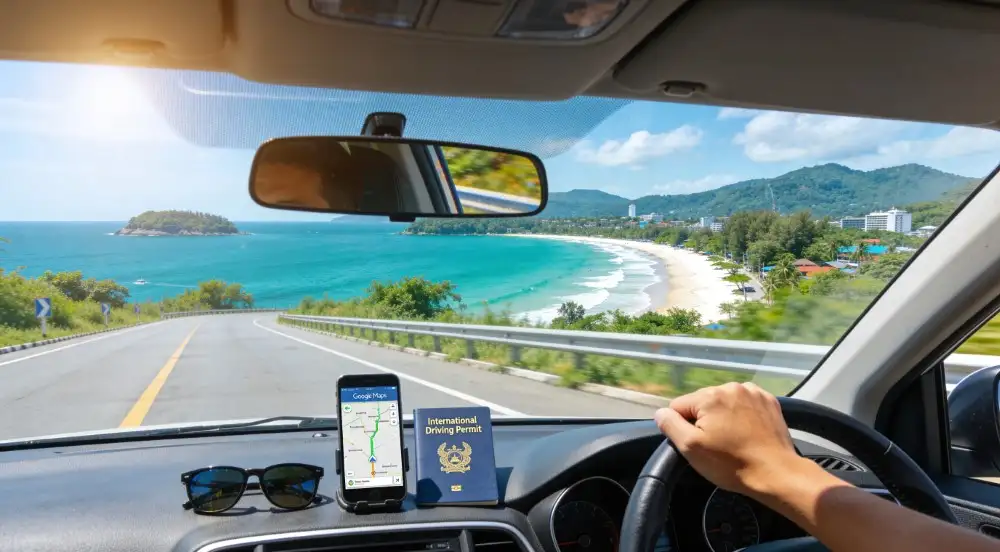
A standard international driving permit (IDP) issued in your home country covers 4×4 vehicles in Thailand. The IDP must be accompanied by your original national driving licence. Ensure your IDP is the 1949 Geneva Convention version, which Thailand recognises. The 1968 Vienna Convention IDP is not accepted. Rental operators will ask to see both documents when you collect the vehicle.
What is the best time of year to overland Isan?
November to February is the sweet spot. The monsoon has ended, temperatures on the plateau are manageable (20 to 28 degrees Celsius during the day), nights in Loei Province drop to genuinely cool levels, and the dirt tracks are at their most stable. March to May is hot and dry, with tracks passable but temperatures reaching 38 to 40 degrees Celsius on the plateau. June to October is monsoon season: tracks deteriorate significantly, some routes require recovery equipment, and certain national park sections close entirely.
Where should I base myself for an Isan overland trip?
Khon Kaen is the most practical central base for vehicle collection, provisioning, and route planning. It has the best vehicle rental options, the most reliable mechanics, good accommodation across all budget levels, and direct flights from Bangkok. Udon Thani suits those starting the northern Mekong route. Korat (Nakhon Ratchasima) is the best gateway for the southern Khmer temple circuit. Ubon Ratchathani anchors the eastern Mekong loop near the Laos and Cambodia corners.
How much does a 4×4 rental cost in Isan in 2026?
A Toyota Hilux Revo double-cab 4×4 rents for approximately 1,800 to 2,500 THB per day ($50 to $69 USD) from reputable operators in Khon Kaen or Udon Thani. Weekly rates reduce the daily cost by 15 to 20 percent. Confirm the rental agreement covers off-road use, includes a full-size spare tyre, and specifies insurance coverage for unpaved road incidents before signing. Fuel (diesel) runs approximately 30 to 33 THB per litre ($0.83 to $0.92 USD).
Is Isan safe for overlanders travelling solo?
Yes, broadly. Isan has a low crime rate and locals are genuinely hospitable toward foreign travellers. The main practical safety considerations are vehicle-related: carrying basic recovery gear, not attempting remote tracks alone during wet season without prior route knowledge, and informing your guesthouse of your planned route and expected return time on backcountry days. Border checkpoint areas require simple passport compliance. Solo overlanders should carry a charged phone with offline maps and a basic Thai phrasebook.
Can I cross from Isan into Laos with a rental vehicle?
Not under standard Thai rental agreements. Driving a rented Thai-registered vehicle across the Mekong into Laos is not permitted without specific cross-border documentation, which very few standard rental operators provide. If a Laos extension is part of your plan, arrange it explicitly with your rental operator before departure and expect additional paperwork and a premium charge. Foot passenger crossings at Nong Khai to Vientiane and Mukdahan to Savannakhet are straightforward for day visits or onward travel.
What mobile data and navigation tools work best in Isan?
AIS has the strongest rural coverage on the Khorat Plateau. True Move performs better in Loei highlands. Activate your Airalo, Yesim, or Saily eSIM before departure so apps are ready at vehicle collection. Google Maps handles sealed roads adequately; Maps.me with the Thailand offline pack is more reliable for secondary tracks. Download offline maps before leaving each province capital. Signal disappears inside larger national park interiors, so carry downloaded route files or GPX tracks for backcountry days.
What are the must-see stops along the Mekong River Road?
Nong Khai town for its riverside cafes and the surreal Sala Keoku sculpture park just outside town. That Phanom in Nakhon Phanom Province for its revered Lao-style chedi on the Mekong bank. Mukdahan for the night market and views across to Laos. Chiang Khan in Loei Province for its preserved wooden shophouse walking street and sunrise views over the river. The detour into Phu Wua Wildlife Sanctuary between Nakhon Phanom and Nong Khai for forest tracks and near-certain elephant sightings at dawn.
How should I handle the military checkpoints near the border?
Stop fully, turn off your engine, and hand over your passport with a smile. Soldiers at these posts are accustomed to foreign overlanders and the process takes under five minutes in almost all cases. They will note your name, passport number, and vehicle registration in a logbook. Do not photograph the checkpoint or soldiers without asking permission first. Keep your vehicle documents and rental agreement accessible in the glovebox. Cooperate fully and the experience is genuinely painless.
Is Isan worth combining with Chiang Mai or Bangkok on a longer Thailand trip?
Absolutely. The most satisfying extended Thailand itinerary for adventure-focused travellers pairs Isan overlanding with a northern Chiang Mai or Chiang Rai leg, rather than the southern islands. The contrast between the Mekong plateau and the northern mountains creates an itinerary that covers an enormous range of landscapes, cultures, and experiences. Bangkok works best as an arrival and departure hub rather than a destination on an overland-focused trip. Domestic flights between Khon Kaen, Chiang Mai, and Bangkok are frequent and inexpensive when booked in advance through 12GO or directly with Nok Air and AirAsia.